About SAV
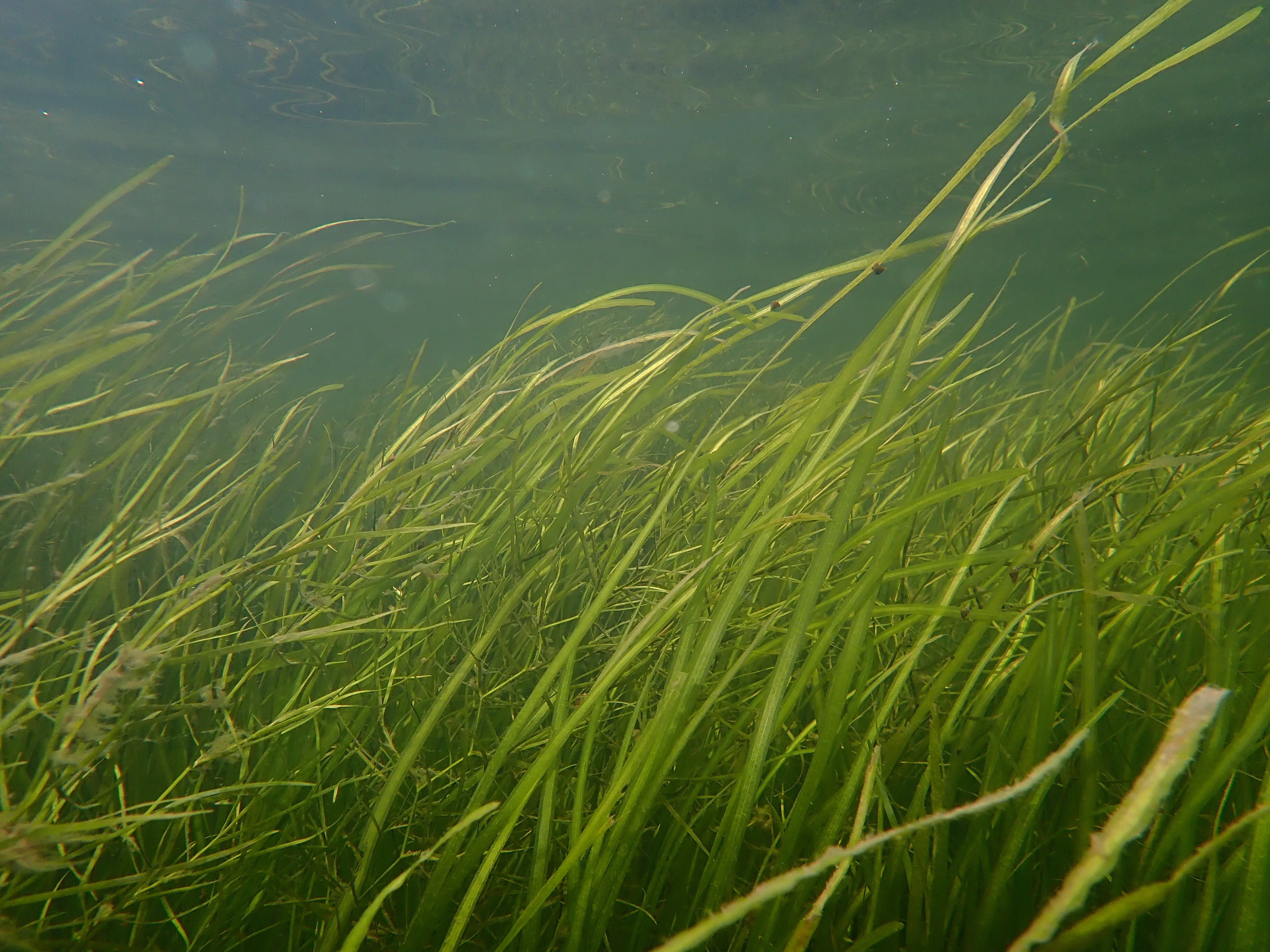 A bed of Vallisneria americana and Heteranthera dubia thriving on the Susquehanna Flats, August 2023.
 What are Bay Grasses?
Bay grasses, or submerged aquatic vegetation (SAV), are rooted, flowering, vascular plants that live underwater and are found throughout Maryland’s tidal and non-tidal waters. The term SAV includes freshwater plants, estuarine plants, and seagrasses. These plants spend their entire life submerged (except for sometimes their flowers and seeds) in places like lakes, rivers, bays, and shallow waters of the coastal ocean.
Over twenty species of SAV are typically found in the Chesapeake Bay and surrounding bodies of water. The majority of the Bay’s SAV species are freshwater plants that thrive in the upper Bay and upstream reaches of its tributaries. Freshwater plants like wild celery and water stargrass cover thousands of acres of Bay bottom in areas like the Susquehanna Flats and are a vital food source for both resident and migrating waterfowl. In the mid-Bay region of the Bay, where the mix of fresh and saltwater creates more stressful conditions, there are fewer species of SAV. Regardless, plants like widgeon grass and sago pondweed thrive in this estuarine habitat and provide vital habitat for fish and shellfish. In the lower Bay, where the water is saltiest because of the ocean influence, only widgeon grass and eelgrass thrive. Eelgrass, however, is the Bay’s only true seagrass and is the preferred habitat of the Bay’s iconic Blue crab!
 A one-clawed blue crab in a bed of widgeon grass in the Severn River.
SAV evolved from land plants, so they are very similar to many of the plants we see in our yards and parklands. But because they lead a waterlogged existence, they also have several unique adaptations that differentiate them. Unlike terrestrial plants, which have rigid stems and leaves to act against gravity, bay grasses are very flexible and have a specialized tissue, called aerenchyma, that provides buoyancy in the water environment. Underwater grasses also lack stomata - an important structure in terrestrial plant gas exchange. Without stomata, gas exchange in underwater grasses takes place across a porous, waxy cuticle layer through a process called diffusion. This cuticle layer also allows nutrient absorption directly across the leaf surface so that underwater plants can take in nutrients from both the sediment and the water column.
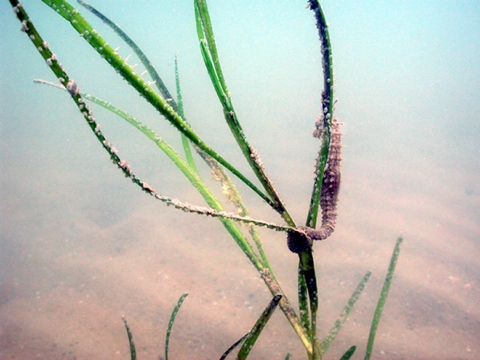 A lined-seahorse clinging to eelgrass, one of its preferred habitats.
Although underwater grasses are efficient at nutrient uptake, too many nutrients in the water column can overwhelm them and fuel the growth of epiphytes, phytoplankton, and macroalgae - all things that compete with SAV for space and block light from reaching their leaves for photosynthesis. Combined with sediment input from the watershed, SAV face several stressors that impact their resilience to changing climate conditions.
Degraded water quality has been a persistent problem in the Chesapeake since the watershed became populated and industrialized. Declines in water quality caused by excess nutrients and sediment led to significant loss of bay grass populations in the 1900s. The implementation of best management practices and the Chesapeake Bay Total Maximum Daily Load - the Chesapeake Pollution Diet - have facilitated water quality improvements throughout the Bay in recent decades, however, and the continued restoration of bay grasses in the Chesapeake is a priority for the Department.
Protecting SAV beds is crucial for a sustainable Chesapeake Bay future. Every action counts! Get involved, spread the word, and support initiatives that conserve and restore these vital resources.
