 When does Maryland start stocking trout?
The Maryland Department of Natural Resources, Fishing and Boating Services, begins trout stocking in February in the eastern, southern, and central counties that experience milder weather during late winter. Trout stocking will begin in Allegany and Garrett counties in March and extend into May. Stocking also continues into May in select waters in central Maryland. Check the Department of Natural Resources website and/or our toll-free number at 1-800-688-3467 to get the latest information. Once Spring Trout stocking begins, the website will be updated daily, and the toll-free phone line will be updated every Friday afternoon.
How many trout does Maryland stock?
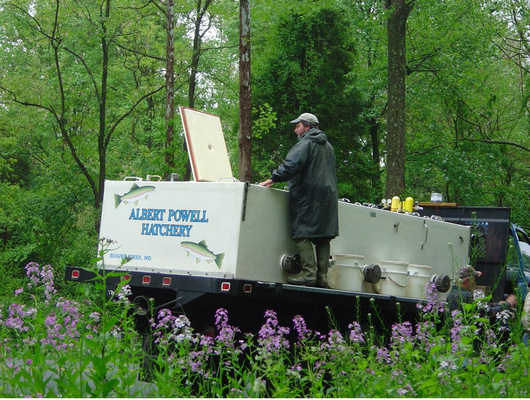
The Albert Powell and Bear Creek Hatchery personnel hatch more than 700,000 trout eggs annually to meet the trout production requirements of numerous Fishing and Boating Services goals such as internal facility fish transfers, both spring and fall “Put and Take” stocking seasons, Youth Fishing Rodeo Program and “Put and Grow” juvenile stocking requests from Freshwater Fisheries Division biologists.
Production (weight of trout produced) will vary some from year to year and is dependent on the available flow of each facility’s source water.
Approximately 240, 000 adult trout are reared for the Spring Put and Take Trout Stocking Program.
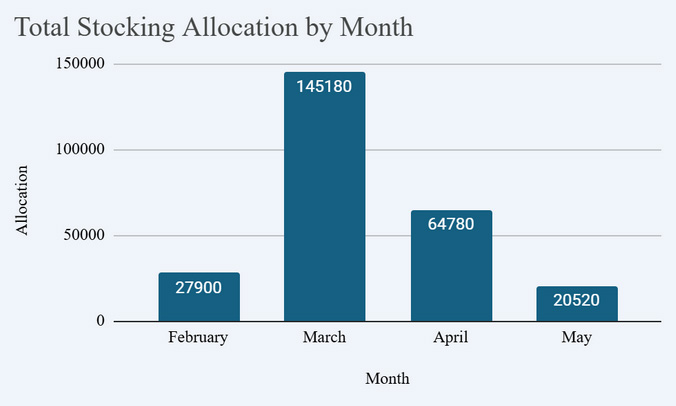
This bar graph shows trout stocking allocation by month.
There are 27,900 in February; 145,180 in March; 64,780 in April; and 20,520 in May.
What factors determine how trout are allocated to each county and waterbody?
The number of trout that are stocked to a given location is determined by several factors that include waterbody size, fishable length, and popularity as determined by angler surveys. Stocked locations must also have adequate parking and stocking access. The department’s goal is to maximize angler experience, opportunity, and catch. Generally, there are more suitable locations to stock trout in the central and western regions of the state, so a greater number of trout and waterbodies are stocked in those locations.
When do I need a "Trout Stamp"?
A trout stamp is required for anyone 16 years of age or older who catches, attempts to catch, or possesses trout in nontidal waters.
Does Maryland have an "Opening Day"?
Yes. Maryland's opening day for trout fishing begins at 6:30 am on the last Saturday in March. Additionally, the Saturday prior to the “Opening Day” is designated as a “Youth Trout Fishing Day.” During this day, children under the age of 16 can fish any Put and Take trout water with a number 1 closure and harvest two trout per child (no brook trout allowed). Individuals 16 years of age or older may not fish in these areas on this day between 6:30 a.m. and 10 p.m.
Where do the trout stocked in Maryland come from?
Maryland has four
coldwater trout hatcheries. Albert Powell Hatchery and Cushwas Hatchery are located in Washington County, and Bear Creek Hatchery and Mettiki Hatchery are located in Garrett County.
What do you feed the trout in your hatcheries?
The fish are fed a diet of commercially pelleted fish food.
How soon will the trout start biting after they are stocked?
There is a common misconception that trout are fed prior to stocking…and this is a common excuse when fish aren't biting! Truth is, fish are removed from feeding many days prior to their stocking date to reduce hauling stress and maintain water quality in the hauling tanks. Although there is a level of stress involved with the handling, loading, and hauling of trout in crowded tank compartments, there are additional factors that can determine the aggressiveness of a trout to eat once stocked. Most importantly, the difference in water source/quality and water temperature between the stocked location and the hatchery. Once acclimated to their new home, fish will slowly begin to behave normally and feed.
Why are trout tossed from buckets and not released more gently?
To get trout from the stocking truck to the stream/impoundment, 15 - 20 fish are carried in a bucket. Oxygen is depleted quickly, and trout that are slowly poured from the bucket frequently lie on the bottom near shore, respiring. A gentle toss encourages them to swim, moving more and better quality water/oxygen over their gills. Remote locations in western states are frequently stocked using aircraft without harm.
Do the fish move upstream or downstream after stocking?
Yes and yes. Keep in mind that fish swim, sometimes long distances. It is not uncommon during stocking efforts to observe fish that were stocked 50-100 yards away arrive at the next stocking location before we do! Trout will eventually settle into the locations that are most comfortable for them. Don't expect to always find fish only where the stocking signs are located along the stream. Remember, part of fishing is identifying and searching for the habitat trout prefer, then fishing those areas.
How old and how big are the trout being stocked?
Most trout that are stocked will average slightly larger than one-half pound each. These fish are approximately 14-17 months old. A small percentage of holdover fish that exceed 24 months of age are also added to designated locations. These fish will average slightly larger than one pound each. And finally, approximately 600 trophy trout are also raised, which are 3-4 years old, weighing between 3 and 5 lbs each. Most streams will receive 1 or 2 of these trout.
Exactly where do you put the fish?
Streams and stocking locations where trout are stocked can be found on the online interactive
Trout Stocking Activities Map. We stock at access points within the colored areas on those maps. Always be mindful of posted property and avoid trespassing.
What makes the golden trout golden?
These fish are actually Rainbow Trout with a golden pigmentation.
Why don't you stock Brook Trout?
We do not raise or stock Brook Trout because we do not want to mix other genetic strains with our naturally reproducing native Brook Trout.
Why does Maryland stock non-native trout species?
Brook trout is the only trout species native to Maryland. Brown trout and rainbow trout have been introduced widely, both nationally and within Maryland, since the 1800s. Where suitable water quality and habitat existed, these species became “naturalized” and established wild, self-sustaining populations. Growing larger than our native brook trout and able to tolerate a wider range of environments, these species have become very popular with anglers and provide a wild trout experience in waters that can't support brook trout. Although hatchery trout are stocked in some waters that support brook trout and naturalized, nonnative trout, the majority of stocked Put and Take locations would not support a trout fishery if stocking were not done.
What about Fall Stocking?
Fall stocking is usually conducted during October. Although there is no set stocking schedule, updates are posted on the website daily and on the phone line (1-800-688-3467) weekly. A press release will be issued to notify anglers when fall stocking is complete.
