Citizens Working to Enhance Maryland’s Oyster Reefs

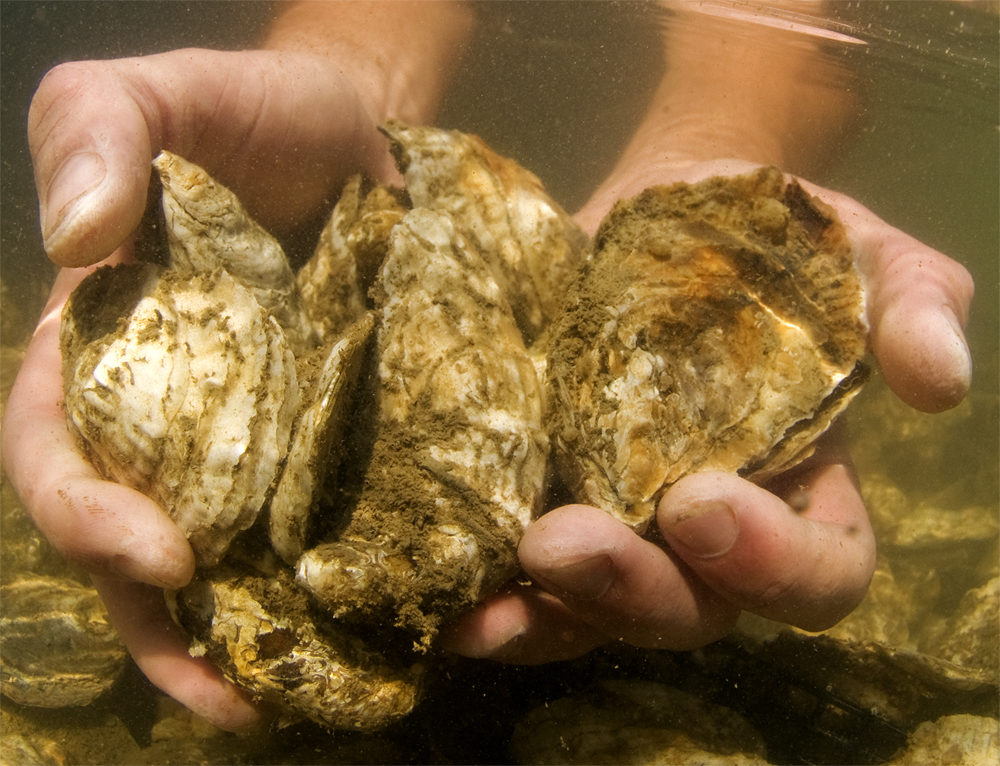
oysters being held in hands underwaterWelcome to Marylanders Grow Oysters, where waterfront property owners are growing millions of young oysters in cages suspended from private piers. Their goal? To protect the young oysters during their vulnerable first year of life, so they may be planted on local sanctuaries where the oysters can enrich the ecosystem and the oyster population.

There is no charge to participants, but the rewards – both personal and ecological – are significant. By fostering these young oysters, our citizen partners are also generating an abundance of fish and other aquatic life and creating live bottom, populated by oysters and other creatures, on sanctuaries closed to harvesting.

Marylanders Grow Oysters is managed by the Maryland Department of Natural Resources in conjunction with the Oyster Recovery Partnership, the University of Maryland Center for Environmental Science, and local organizations.


decorationOyster Cage Update

This summer, over 1 million oysters will be planted in sanctuary areas by the growers in the Marylanders Grow Oysters Program. Back in September, approximately 5,900 cages were stocked with spat to prepare for this summer's plantings. There are 30 tributaries in the program with over 5,000 people involved to grow oysters to enhance the ecology of the planted sites..


decorationWhere do Marylanders Grow Oysters?

The Marylanders Grow Oysters Program began in 2008 in the Tr​ed Avon River, but is now active in 30 different rivers, creeks, and coves. See if your area is in the program.  View a map​ of all the tributaries.


decorationOur Partners

​​

decorationMGO FAQs

What do I do with my cage in the winter when the creek freezes over?


Simply adjust the line and lower your cages until they are just above the bottom, but not on it. The oysters must be totally under water at all times for the oysters to survive. Your oysters will not freeze as long as they are in the water. If they are exposed to the frigid air they can die.​

Do I need to feed my oysters?

 
No. Oysters eat algae and the Bay provides it for them.

I can't see any spat? Did I get blank shells

 
Spat from the hatchery are very small and may not be readily visible. Let them grow about a month or two and they will be larger and easier to see. If by then you still don't see any spat let us know.​

What if my oyster cage becomes heavily fouled?

 
Scrub your cage with a brush (no detergent or soap) and dip it in the water or hose it down. This accumulation of fouling organisms (similar to what grows on your piling) is normal but can accumulate and become a nuisance. It can make your cage very heavy.​

Will the fouling growth hurt the spat?

 
No. The growth on the cage wire won't hurt the spat. It will simply make the cage heavier. As long as the wire mesh of the cage is at least 50% open for water flow the oysters will receive plenty of water. In other words the cage could be about 50% closed up due to fouling and still the spat will be ok. But please tend the cages and keep them from getting this fouled.​

When will the oysters be collected?

 
The oysters will be collected near the end of May into early June, about 9 months after you receive them. This time period avoids the heavy fouling that would occur if you continued tending the cages through the summer.​

Will the oysters I grow be moved away from my river or do they stay here?

 
For most tributaries, the oysters will stay in your river, planted in a local sanctuary. If you are in a creek off the river, your oysters will be moved to the main river for planting because small creeks and coves rarely have suitable bottom for planting oysters. For a few tributaries, your oysters will be moved to an adjacent river because there is no sanctuary yet in your river.​


Why are my spat growing so slowly?

 
Slow growth could be due to silt, low salinity, or low temperatures. If the young oysters (spat) are stressed by high amounts of silt, growth can be stunted. Rinsing the oysters more often will help. If the salinity of the water is very low due to abundant rainfall, the spat may not grow very well. In this case, the only remedy is for there to be less rain. Also, your spat may grow slowly simply because it is cold – water temperatures below about 50 degrees reduce growth dramatically.​​


Can I eat the oysters I grow?

 
No. First, the oysters are not safe to eat because they grow close to the shoreline. The oyster seafood industry is highly regulated and waters where oysters are harvested are carefully monitored to ensure that the seafood is safe for human consumption. Second, the oysters are too small to harvest after only one year in your cages. Finally, this project was created to enhance the oyster population​ so all the oysters will be planted in a sanctuary.​


What do I do if I can no longer care for the oysters and want them removed?

 
Please contact the Department of Natural Resources by emailing [email protected]​​ with your request.​


Top


decorationGetting Started

DoIT FAQ ‭[2]‬

What You'll Need

 
  • An existing pier or wharf with at least four feet of water at low tide located in one of the tributaries selected for the program, including creeks, coves and inlets in that tributary.
  • The willingness to provide maintenance for up to four cages of oysters up to 10 months.
  • An interest in the welfare of the Chesapeake Bay and becoming a Bay and oyster steward.​


After I sign up, what can I expect to happen?


You will receive notification from the local sponsor (not DNR) that the cages containing up to 500 oyster spat per cage are ready for pickup in your local community. At the time of pickup you will receive a short briefing and information package on how to care for your oysters and then receive your oyster cages.


How big are the cages?

 
The cages are 18" long by 1 foot wide. They will weigh about 20 pounds when the oysters are grown after a year.​


What do I do with the cages?

 
On the day you receive your cages, attach them to your pier or wharf (with the​ rope provided) so the cage hangs at least 6 inches off the bottom, away from sand and silt. The cage shouldn't touch the bottom. Also, the cage should be far enough below the water surface that in frigid winter weather the oysters are not exposed to the freezing air.​


What type of maintenance is required?

 
While the cages and oysters are in your care very little maintenance is required. The main task is to keep them clean and, in the winter, keep them from freezing. Every two weeks, you should rinse your oysters by lifting the cage up and down out of the water to remove silt and sediment build up. "Dunk them like a tea bag". If needed, you can rinse them with a hose if you have one at your pier or you can scrub the cages with a brush and then rinse them by dunking them in the water. You don't need to scrub the shells or the oysters. The goal is to reduce fouling growth on the wire cage so water can flow through to the oysters and so the cage doesn't become too heavy due to the fouling growth.

During the winter, the oysters will die if exposed to freezing air temperatures; the oysters must be kept entirely in the water even on very low winter tides. Place the cages so they are just above the creek bottom to minimize the potential for freezing. In the spring, you can re-raise the cage.​

What happens at the end of the growing period?

 
In about 9 months, you will be contacted and arrangements will be made for tributary representatives to collect your oysters for permanent placement on a sanctuary, an area closed to oyster harvesting. You will keep the cages to begin care-taking another group of spat.​


What happens after the oysters are collected?

 
If you want to continue with the program you will receive new oyster spat. If you elect not to continue, your cages will be collected.​

What happens if I have additional questions?

 
Should you have additional questions, the other sections of this website may provide the answers, or feel free to contact the Marylanders Grow Oysters Program manager, Eric Campbell, at [email protected]​.​

Growing Oysters on Your Own?​

 
If you are growing oysters on your own and aren't part of Marylanders Grow Oysters or another organized oyster growing group, such as the Chesapeake Bay Foundation, then please register your activity here​.​​

Content Editor


decoration​Share Your Experience​

​Share your experience with others: Submit a photo of you and your family with a note about your experience by: emailing Eric Campbell​.​​