Results
Monthly Abundances
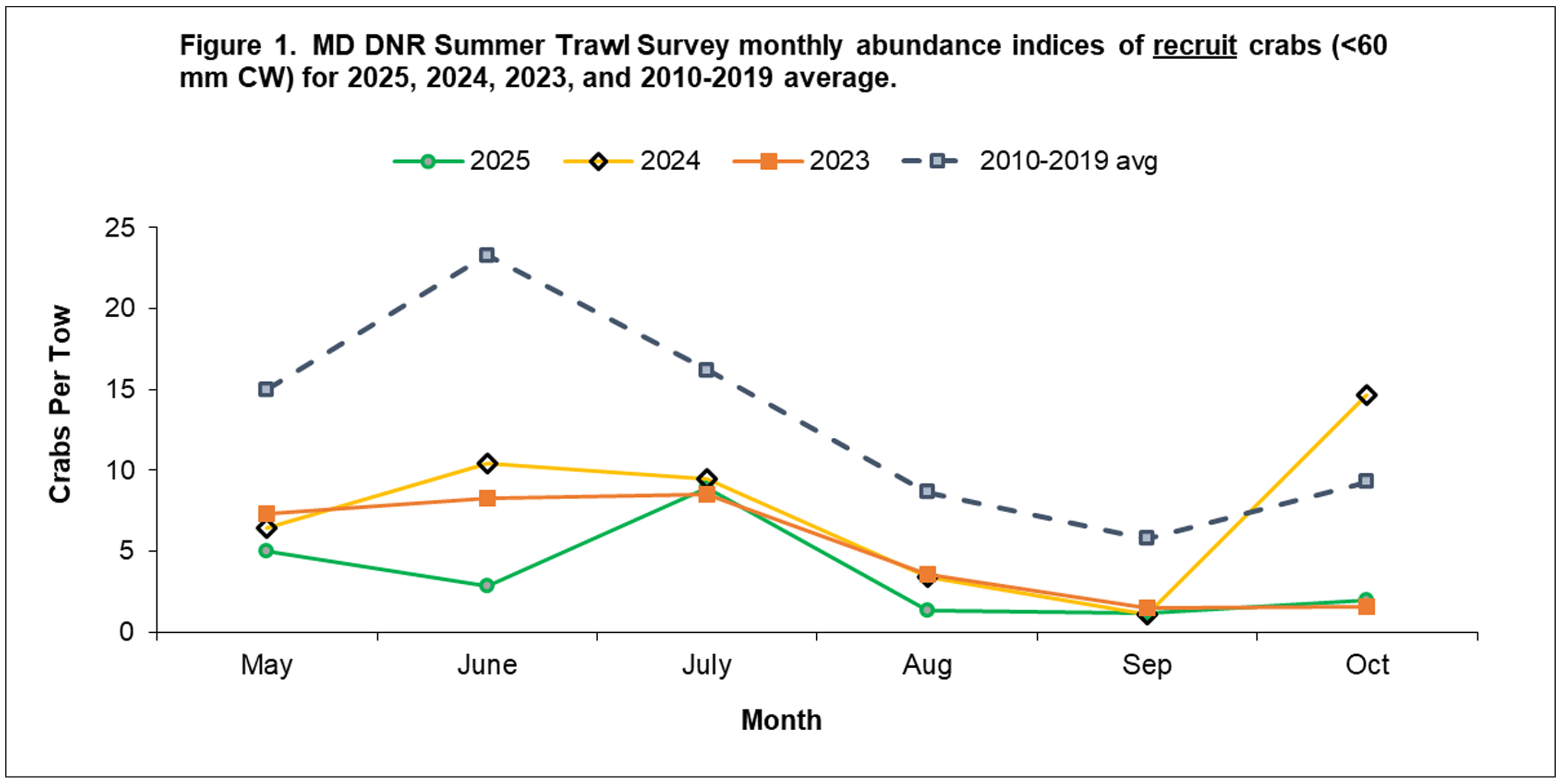
Recruit: The 2025 monthly abundance indices for recruit crabs were relatively consistent with 2023, remaining below the 2024 indices and the 2010-2019 average. However, there was a notable decrease in recruits in June 2025. In general, recruit abundance is typically greater in the early summer, declines mid-summer, and then rebounds in the fall with the arrival of new recruits after spawning. (Figure 1)
Monthly Abundance
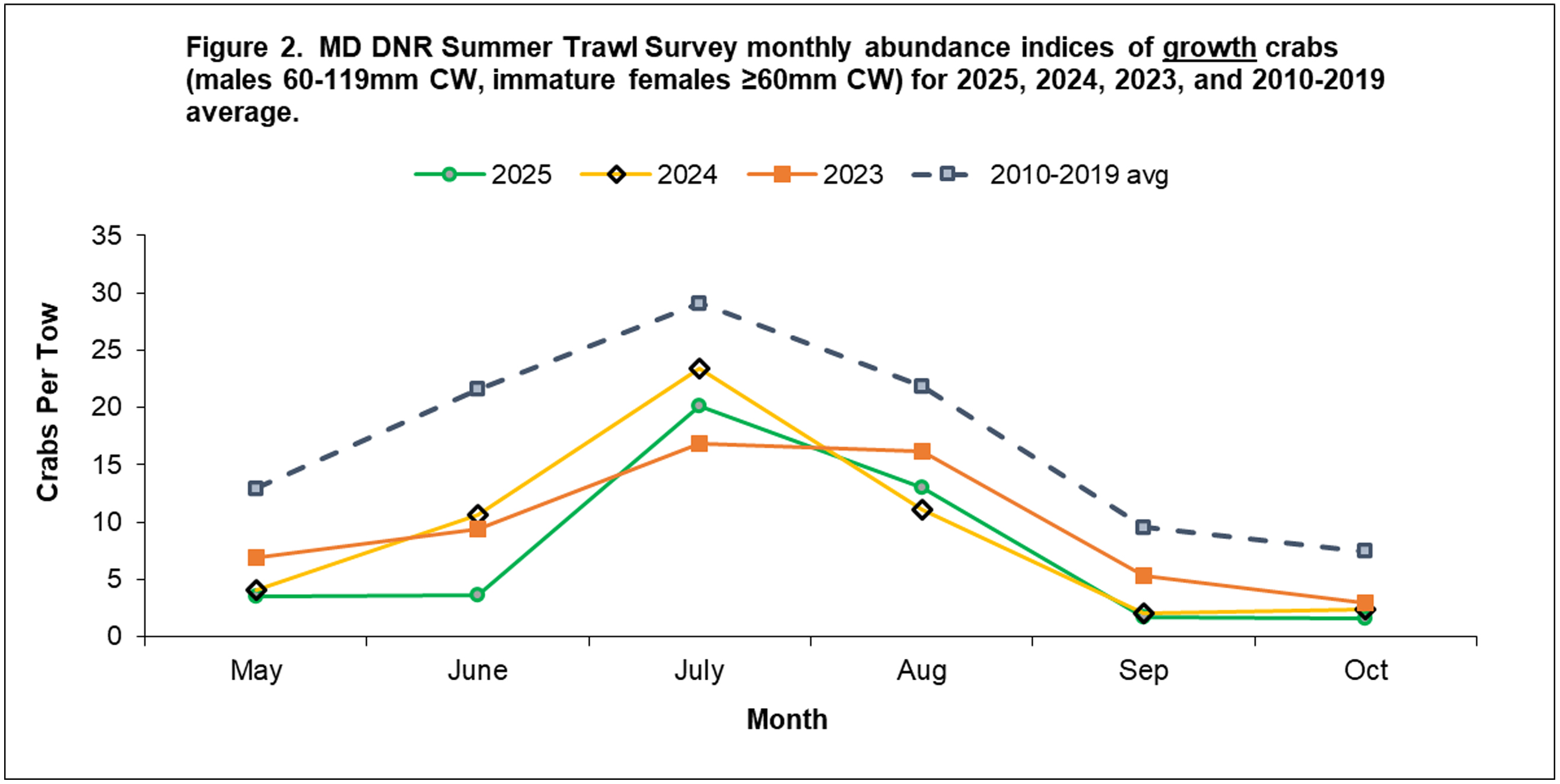
Growth: The 2025 monthly abundance indices for growth crabs continued to follow the consistent pattern seen in previous years. Growth crab abundance increased as water temperatures warmed, reaching a peak in mid-summer, before declining again in the fall as they mature. (Figure 2)
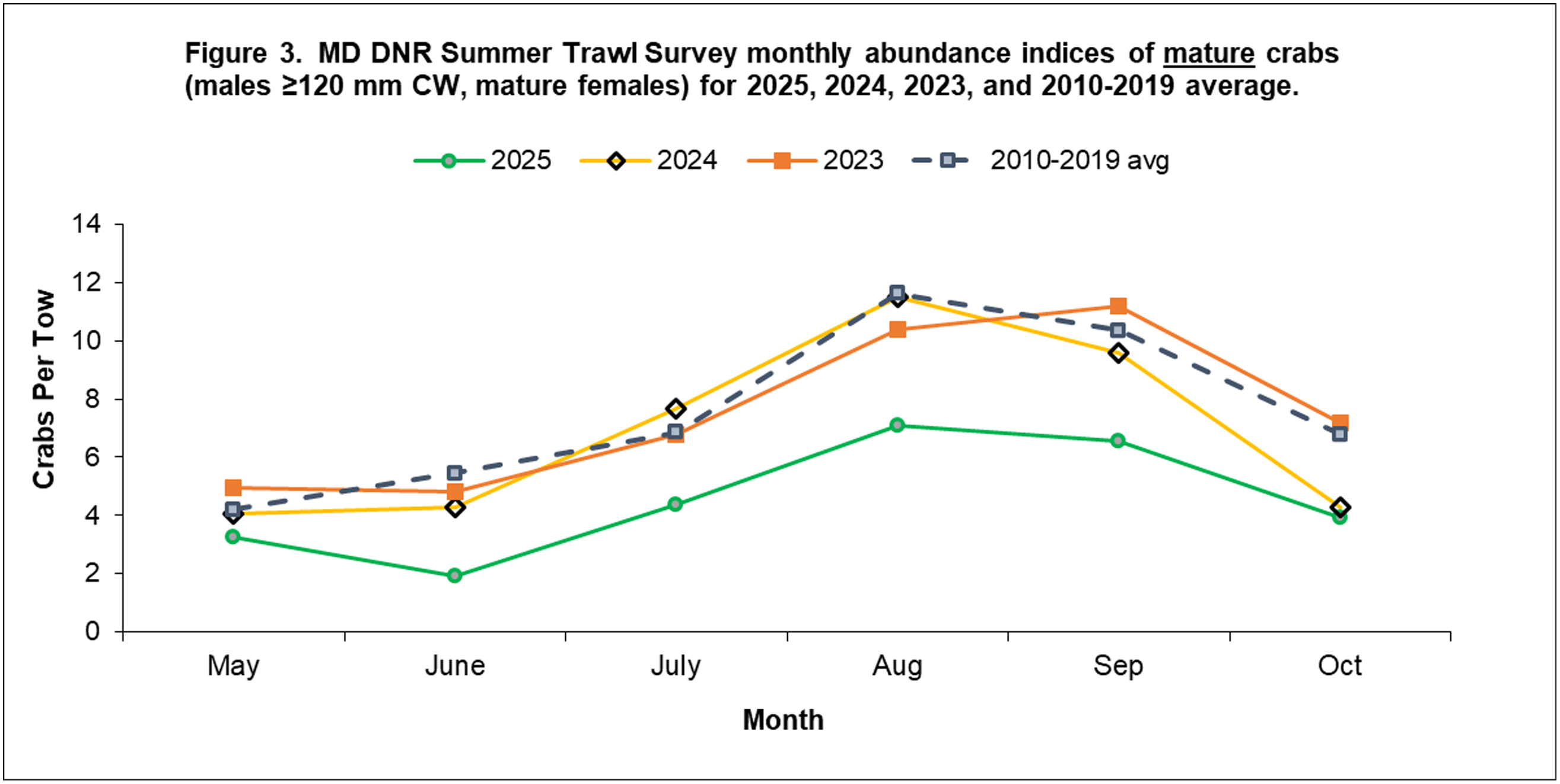
Mature: The 2025 monthly abundance indices for mature crabs also followed the traditional pattern, with lower abundance in spring and early summer as crabs are growing and then reaching the highest abundance in late summer. Mature crab abundance decreases again in the fall as mature females migrate south to the mouth of the Chesapeake Bay to spawn. (Figure 3)
Annual Abundances
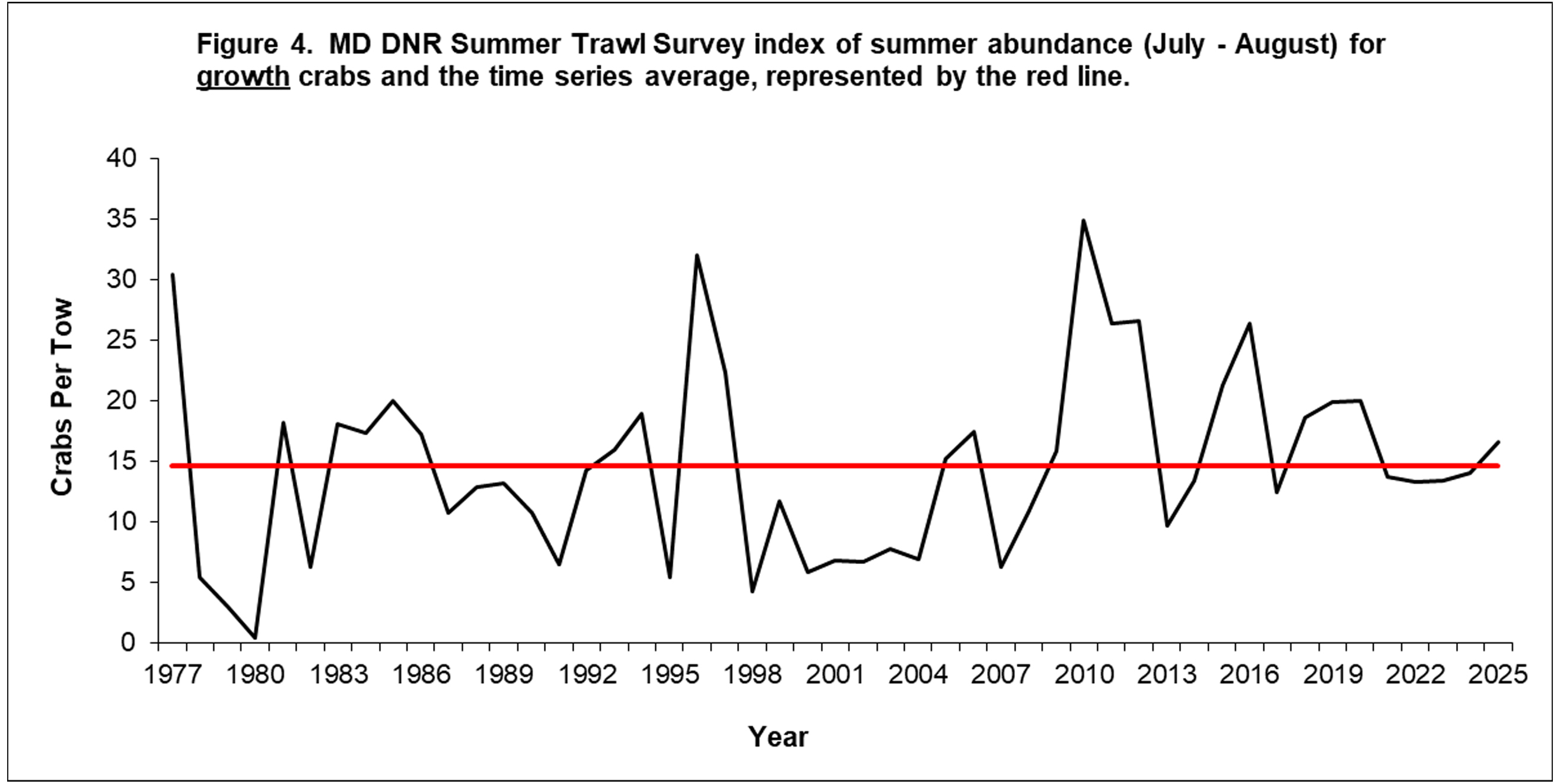
Growth: In 2025, growth crab abundance in the summer (July - August) increased above the survey average as seen in recent years. There have been no long-term trends in growth crab abundance since the start of the summer trawl survey in 1977. However, growth crab abundance was consistently low from 1998 to 2008. Notable peaks in abundance occurred in 1977, 1996, and 2010, and the lowest abundance observed in the survey was in 1980. (Figure 4)
Mature Females: In 2025, mature female abundance in the fall (August - October) decreased slightly below the survey average, following a similar cyclical trend seen over the time series. Notable peaks in abundance occurred in 1984, 1996, 2011, and 2019. Periods of lower female abundance occurred in the late 1970’s-early 80’s, the late 1980’s-mid 90’s, and late 1990’s-mid 2000s. (Figure 5)

Average Carapace Width
The average carapace width of legal males and mature females is calculated using size data collected from May to October each year. The average size of legal males and mature females decreased slightly in 2025. Average crab size has varied throughout the time series for both males and females, but the long-term average has remained relatively constant. (Figure 6)

