Welcome back, Habichatters!
Happy summer to all who enjoy sunshine! To those of us less inclined to experience the radiative effects of the hot anger ball, we continue our exploration of the more mild large astral body with an article about Summer Moons. Some of us may find joy in cool streams on these hot days, and for them in particular we’ve written about crayfish, or crawdads, or crawfish (take your pick, there are enough names to go around!)
Speaking of wildlife, the State Wildlife Action Plan (SWAP) final draft is complete, and we’d love to share the blood, sweat, and tears that went into this massive undertaking! If you’re looking for something a little lighter (or just a way to entertain yourself or even out-of-school kids), read up on our DIY Wildlife Houses and decide if any of them are right for your space.
--
Team Habichat

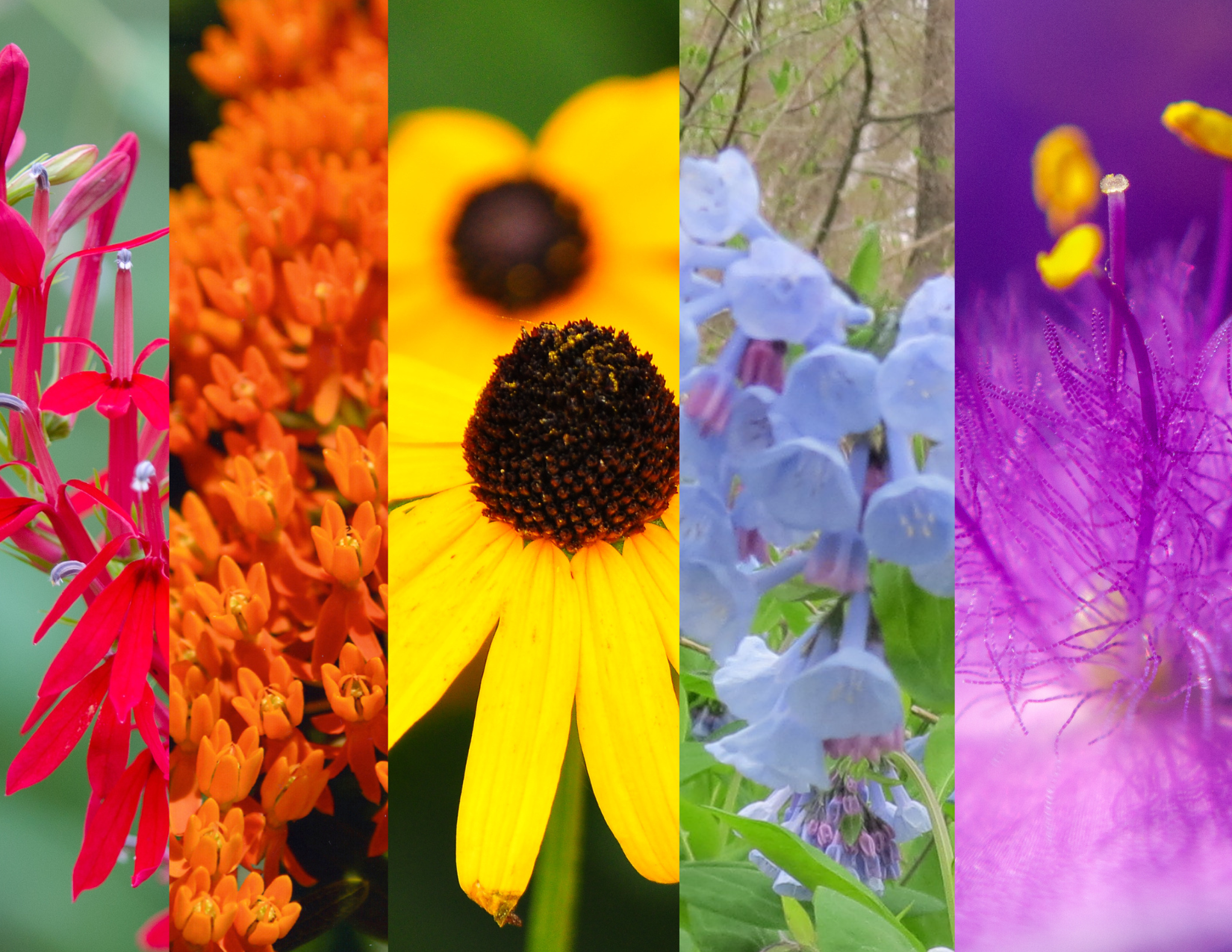 A rainbow of native flowers. From left to right; cardinal flower (by Kristine Lochart), butterfly weed (Elizabeth Gill), black-eyed susans (Andrew Rimel), Virginia bluebell (DNR staff), and spiderwort (Andrew Gosden). From photos submitted to the DNR Photo Contest.
 “If you look the right way, you can see that the whole world is a garden.”
~ Frances Hodgson Burnett
In This Issue:
Moon Mythology and Maryland Wildlife: Summer Moons
Learn how the full moons receive their nicknames, and maybe consider creating our own. This modern folklore gives us an excellent opportunity to learn more about both the night sky and Maryland’s wildlife!
Go to article
Natural Heritage Program Spotlight: The SWAP
How should we as Maryland citizens work collaboratively to protect rare species and keep abundant wildlife from becoming rare in the future? DNR’s Natural Heritage Program staff and community stakeholders across the state have been working tirelessly to tackle this challenge. We are proud to share that the final draft is complete!
Go to article
Native Animal Profile: Crayfish
This creek critter is uniquely charismatic and still quite common despite the increase in threats to its survival. Whether you call it crayfish, crawfish, mudbug, crawdad, freshwater lobster, or another of many common nicknames, this humble crustacean is often seen but not often fully appreciated.
Go to article
No Place Like Home: DIY Wildlife Houses
Looking for some hands-on activities when it gets hot outside? Stay cool and let your wildlife neighbors do the same with these inside projects designed to make the outside a little more homey! Great activities to share with kids!
Go to article
You can also
Download and Read the Entire Issue Offline
We want to hear from you!
Letters, e-mail, photos, drawings. Let us know how successful you are as you create wildlife habitat on your property.
Write to Me!
Sarah Witcher
Maryland Wildlife and Heritage Service
Maryland Department of Natural Resources
580 Taylor Ave., E-1
Annapolis MD 21401
[email protected]
410-260-8566
 | Habichat, the newsletter for Maryland's Stewards of Backyard Wildlife, is published by the Wildlife and Heritage Service, Maryland Department of Natural Resources. The facilities and services of the Maryland Department of Natural Resources are available to all without regard to race, color, religion, sex, sexual orientation, age, national origin, or physical or mental disability. This document is available in alternative format upon request. |
