Objectives of the Aquatic Animal Health Laboratory
The Aquatic Animal Health Laboratory plays a vital role in protecting the health of Maryland’s fish, shellfish, and other aquatic species. Its primary purpose is to detect and identify pathogens, diagnose diseases, monitor aquatic animal populations for health-related problems, and support biosecurity efforts in aquaculture and wild ecosystems. The primary focus of the lab work is to: - Perform fish health inspections of fish produced by Maryland hatcheries
- Provide diagnostic evaluations for state hatcheries and private fish and shellfish producers
- Provide support to annual surveys of disease in oysters and striped bass
- Provide assistance for surveillance of fish pathogens on the hatcheries
- Provide fish health testing to monitor the health status of fish populations for conservation projects throughout the state
- Provide support for necropsy and tissue sampling of dead stranded marine mammals and sea turtles.
The Aquatic Animal Health Lab consists of the following capabilities:
- Animal necropsy - A “necropsy” is the animal equivalent of an autopsy. A necropsy involves the examination, dissection, and sample collection of dead aquatic animals such as fish, oysters, sea turtles and others to determine condition and identify disease
- Parasitology - specialized procedures may be used to observe and examine a wide range of parasites. Parasites may be microscopic or easily visible with the naked eye
- Bacteriology - bacteria are cultured on specialized media and are characterized using a wide variety of biochemical and physical tests
- Virology - viruses require living cells to replicate. Staff use a variety of cell lines collected from fish that are susceptible to the viruses of concern in Maryland
- Histology - samples collected from aquatic animals may be preserved and prepared for microscopic examination of cells and tissues
- Biomolecular - This lab consists of the amplification of select DNA or RNA from tissue samples to detect or confirm the presence of and identity of pathogens.
NECROPSY LAB
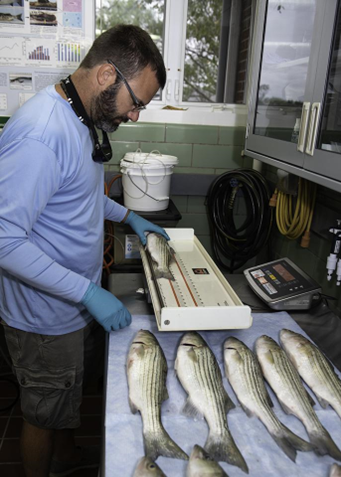
Fish are weighed, measured and examined as part of a comprehensive necropsy.
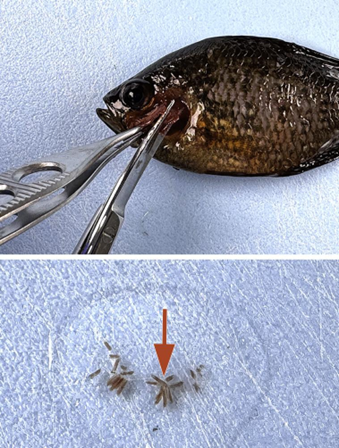
Fish gill (top) is collected from a sunfish for examination. Gill filaments (bottom, arrow) and other external features such as scales or fin portions are placed on slides and examined under a microscope for bacteria and parasites.
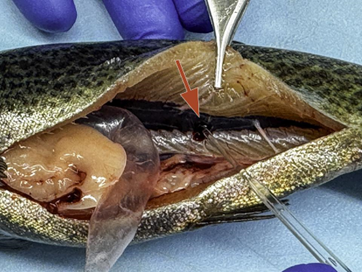
An internal exam of a trout. The kidney (arrow) and other organs are sampled to detect and identify bacteria and viruses.
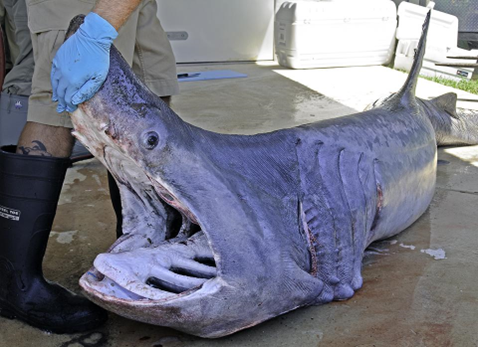
Not all fish fit inside the necropsy lab, such as this 14 foot juvenile basking shark.

Marine mammal and sea turtle necropsy lab. Staff examine and dissect (necropsy) a bottlenose dolphin that washed ashore on Maryland’s Atlantic coastline. Stranded marine animals are necropsied to determine cause of death and collect samples for research.
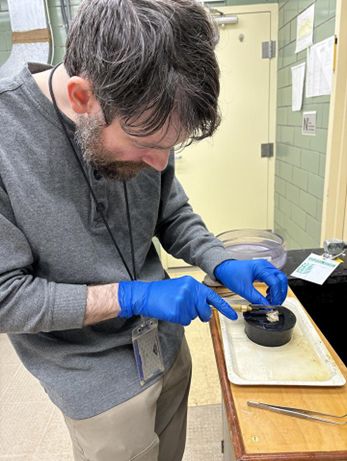
An oyster being necropsied in the shellfish pathology lab.
PARASITE LAB
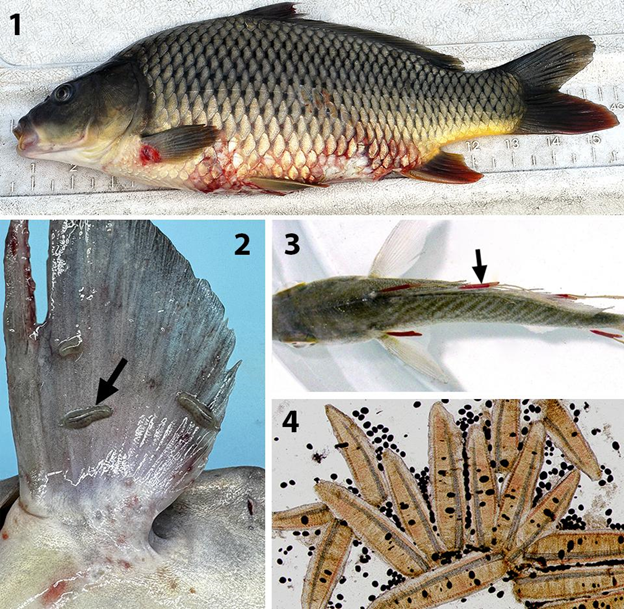
Many types of parasites can infect fish and under certain conditions can cause disease. Some parasites are microscopic while others are large enough to be seen unaided. 1) Sores on a common carp from an infection of microscopic parasites (Epistylis). 2) Leeches (arrow) on the fin of a blue catfish. 3) Long red crustacean parasites (arrow) attached along the back of a spot. 4) Numerous microscopic parasites (Piscinoodinium, black spots) in a sample of gill.
BACTERIA LAB
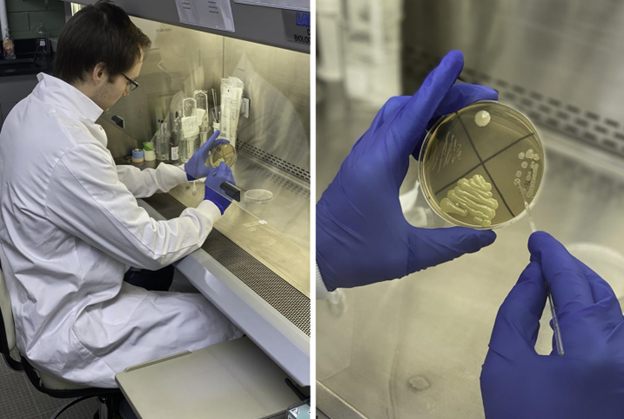
Examination of bacteria isolated on agar media.
VIRUS LAB
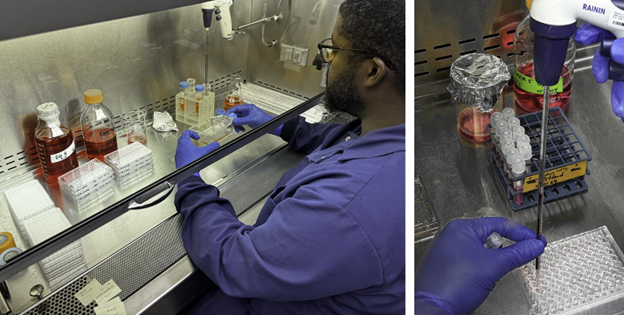
Living cell lines from fish are used to detect viruses (left). Cells are inoculated with tissue samples (right) and examined for signs of viral replication.
HISTOLOGY LAB
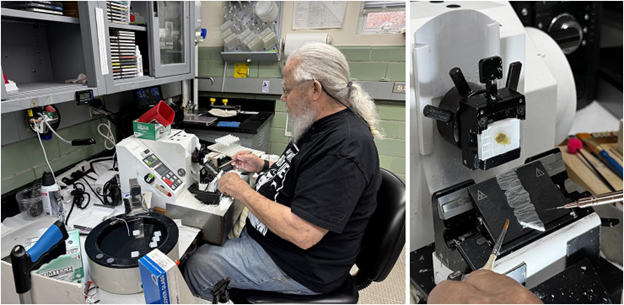
Small pieces of organs from aquatic animals are preserved and embedded in wax and very thin slices are shaved off (called ‘sections’) on a machine called a microtome (seen in the above images).
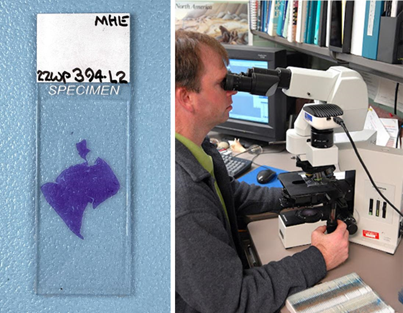
Tissue sections are placed on glass slides and stained (Left) so that cells and signs of disease can be observed when examined under a microscope.
BIOMOLECULAR LAB
Biomolecular testing involves a wide range of activities related to analysis of DNA, RNA or other macromolecules that may be unique to each species or individual. Our use of bio-molecular work mostly relates to analysis of samples collected from aquatic animals to determine if a pathogen is present or to confirm the identity of a suspected pathogen. A good example of a commonly used bio-molecular tool is polymerase chain reaction test, or more commonly referred to as a PCR test.
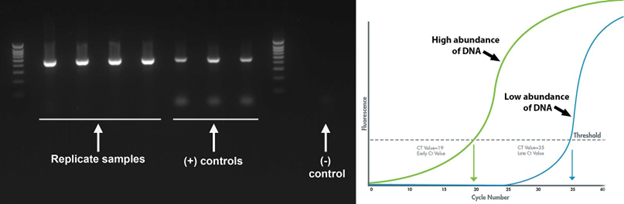
Endpoint PCR test results demonstrating a positive detection of target DNA in 4 replicate samples (Left). More sophisticated tests, such as quantitative PCR, can provide a relative estimate of the amount of DNA present in positive samples (Right).
