Living shorelines are a way to protect your shoreline from erosion while also maintaining natural coastal processes and protecting or creating natural habitat for Maryland's native species. Depending on the location, they can incorporate a variety of techniques, such as breakwaters, sills, and native marsh grass plantings.
Click on a link below to jump to the relevant section
Living Shoreline Techniques and Project Examples |
FAQs |
Living Shoreline Creation Process |
Funding Opportunities |
Permitting |
Resources |
Research
Living Shoreline Techniques and Project Examples
Shoreline Erosion Control Techniques and Project Examples:
1. Traditional Sill - A low elevation stone structure placed parallel to the shoreline, protecting marsh systems that would otherwise be vulnerable to high wave energy and erosion. Its crest is at or slightly above the elevation of mean high water, designed to retain sand and marsh on its landward side.
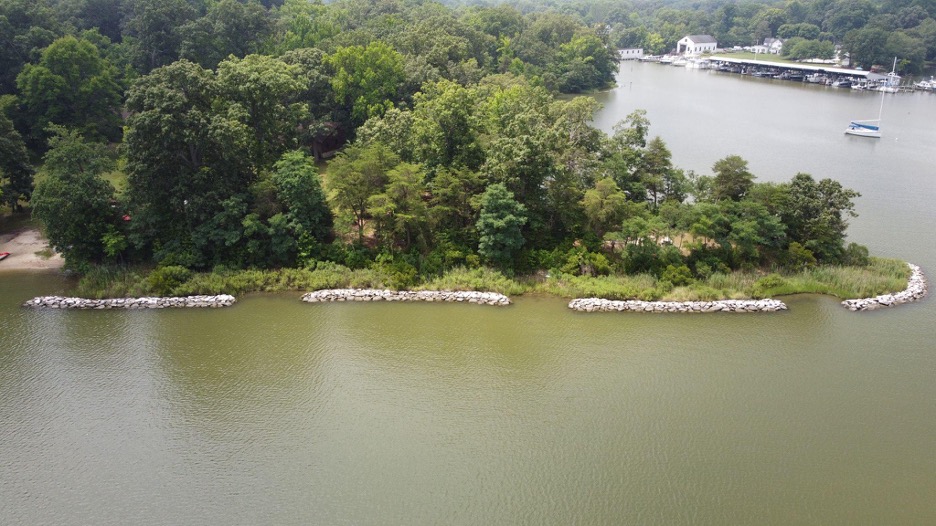
West River United Methodist Church Camp - West River, Anne Arundel County
2. Groins - Groins are narrow structures of varying lengths and heights that extend, fingerlike, into the water and are usually constructed perpendicular to the shoreline. Their primary purpose is to trap and retain sand, filling the areas of shoreline between them. The accumulation of sand between the groins acts as a barrier that waves can attack and erode without damaging upland areas.
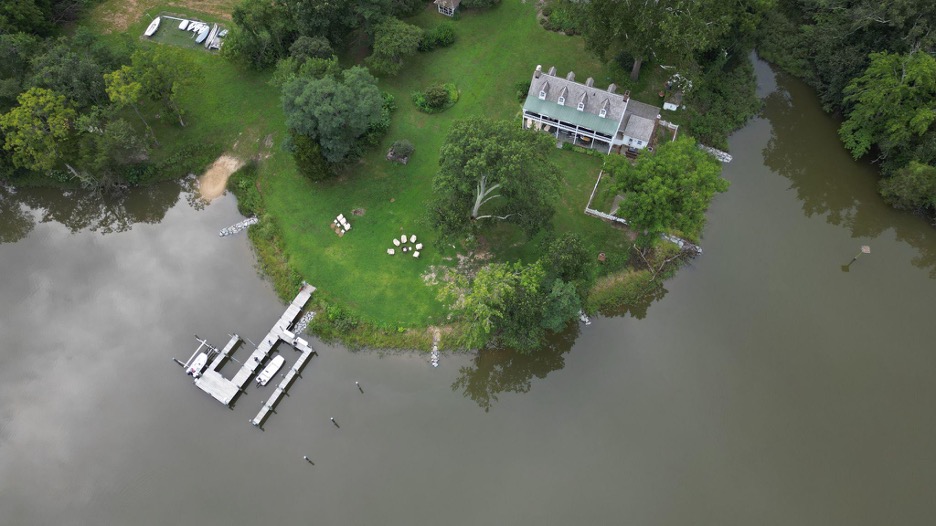
Private Residence, West River, Anne Arundel County
3. Headland Breakwater - Stone structures placed attached to a shoreline that, over time, create a series of crescent shaped beaches between them.
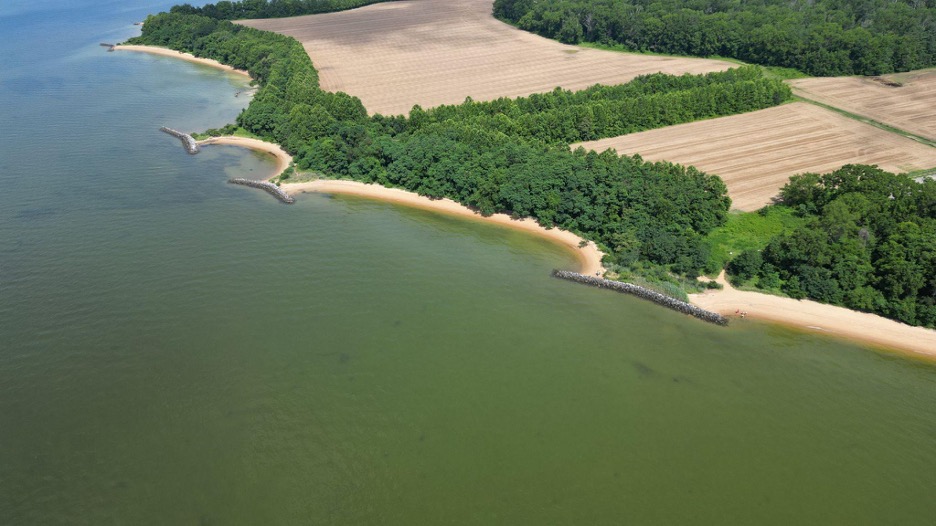
Newtowne Neck, Potomac River, St. Mary’s County
4. Shingle Beach - Shingle beaches are beaches composed of a mixture of sand, gravel, & cobble as opposed to only sand.
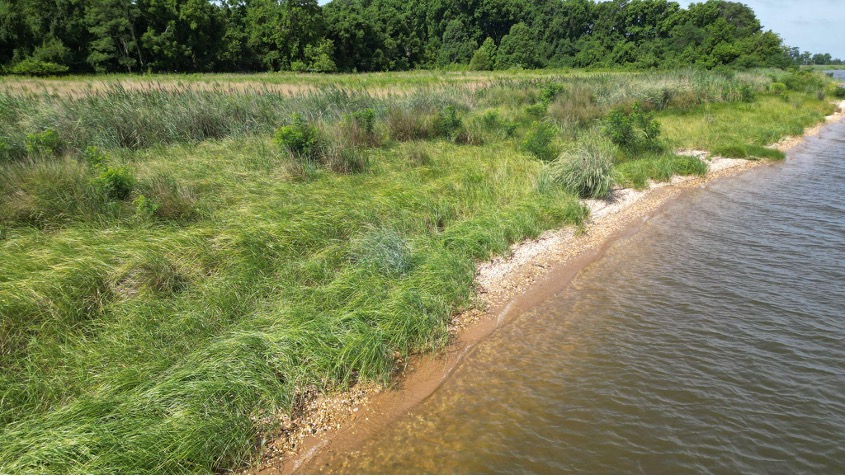
Conquest Beach, Queen Anne’s County, Chester River MD
5. Biolog / Marsh Creation - Biologs are bundles of natural materials that, when placed in a low wave energy environment, can facilitate the growth of marshland along a shoreline. This image shows a biolog project during the construction process, with bundles of natural fibers being staked into the ground.
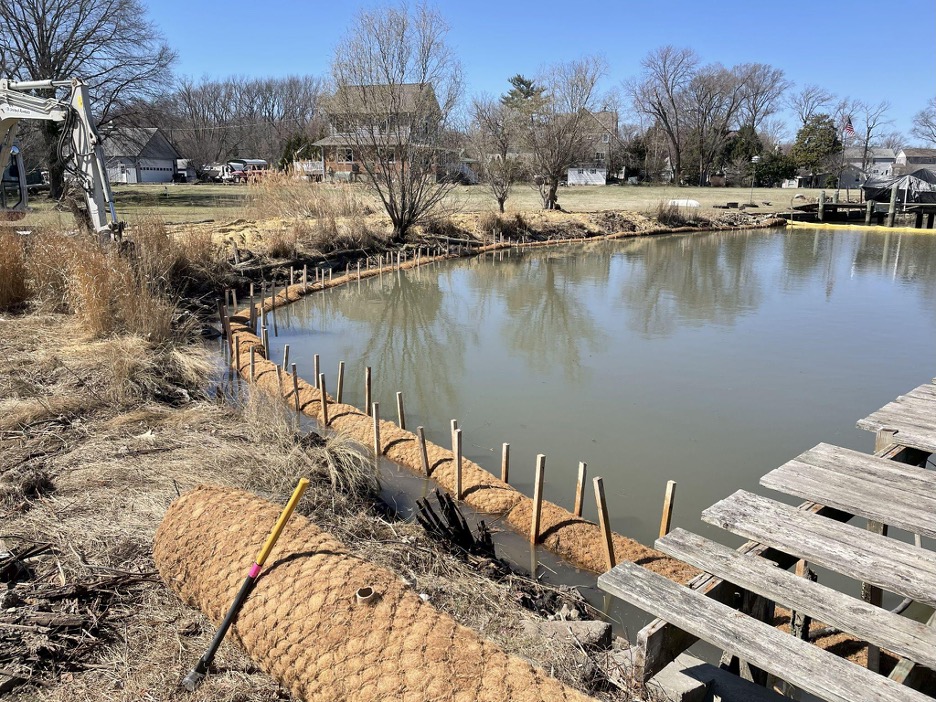
Baynes Cove, Baltimore County, Seneca Creek, Mid-Construction
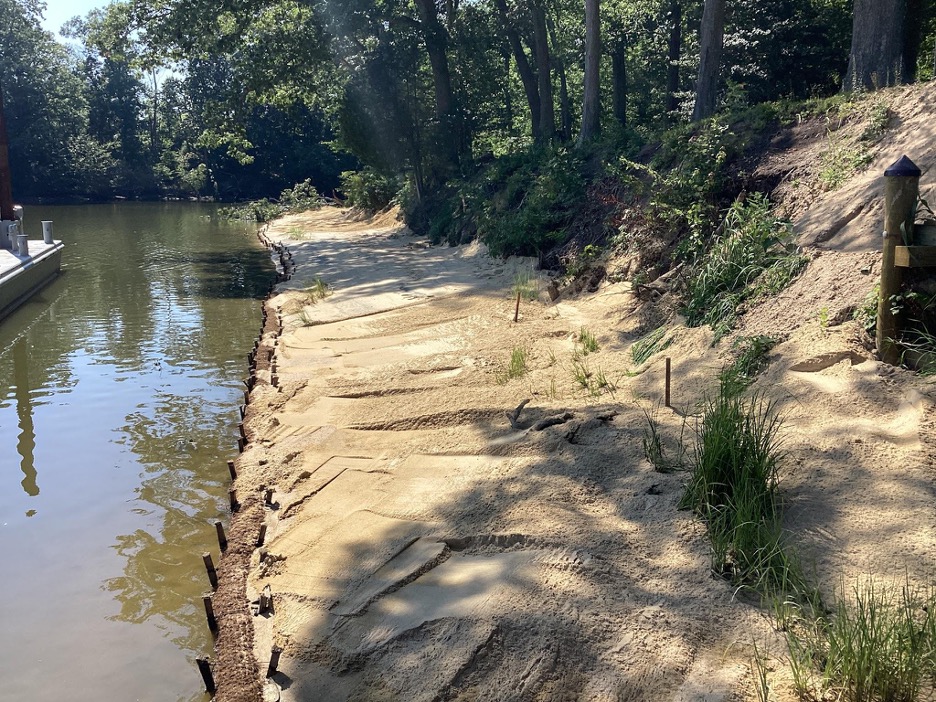
Blue Heron, Wye Island State Park, Granary Creek, Mid-Construction. Note that sand is being backfilled from the submerged biologs to the water’s edge.
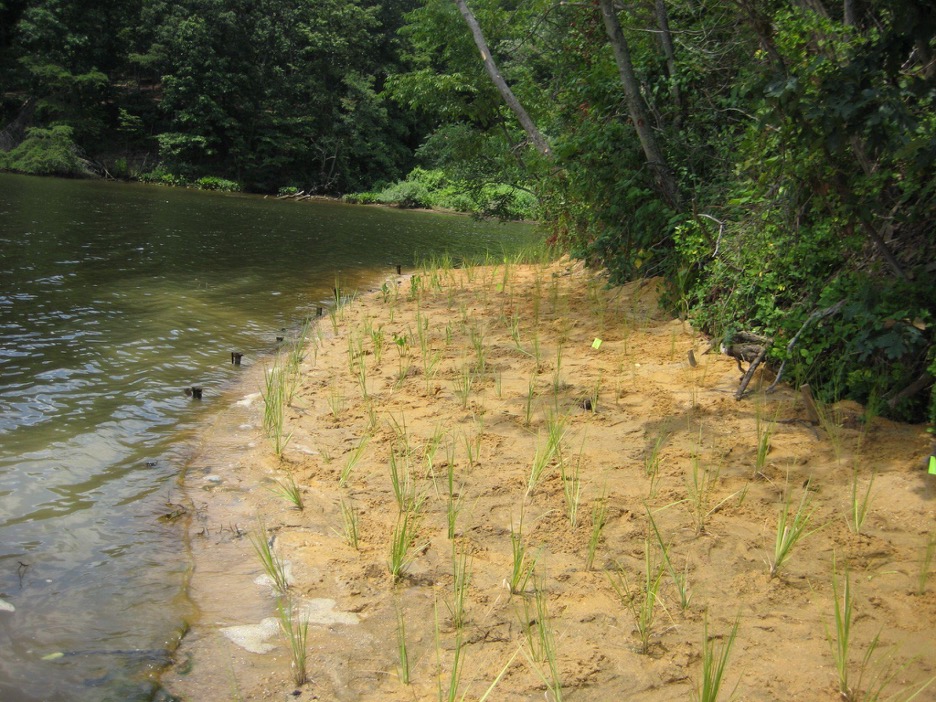
Weems Creek, Annapolis, Post-Construction. In this example, construction has been completed. The area between the water’s edge and the biologs has been completely backfilled with sand, and native vegetation has been planted to eventually grow into marsh habitat
7. Vegetated Headland Breakwaters - A headland breakwater system designed to be covered with vegetation throughout.
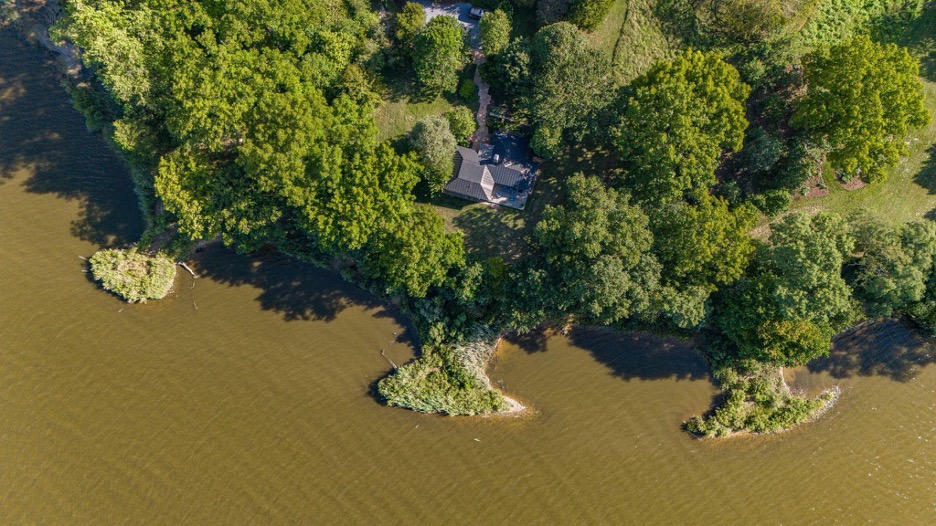
Windy Hill Family Farm, Queen Anne's County, Corsica River
A vegetated headland breakwater site before construction.
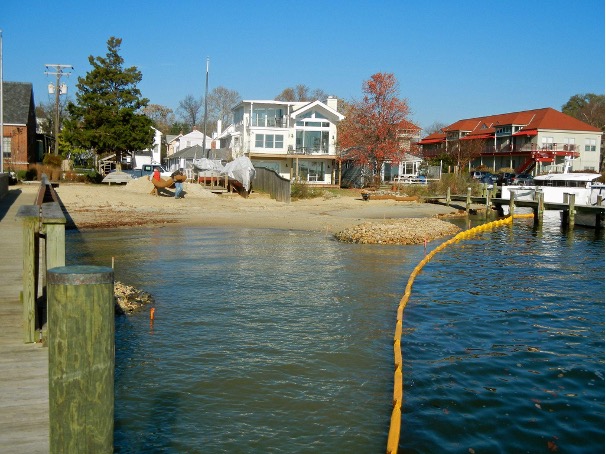
Annapolis Maritime Museum, Anne Arundel County, Pre-Construction
That same site after construction has completed and vegetation has been allowed to grow.
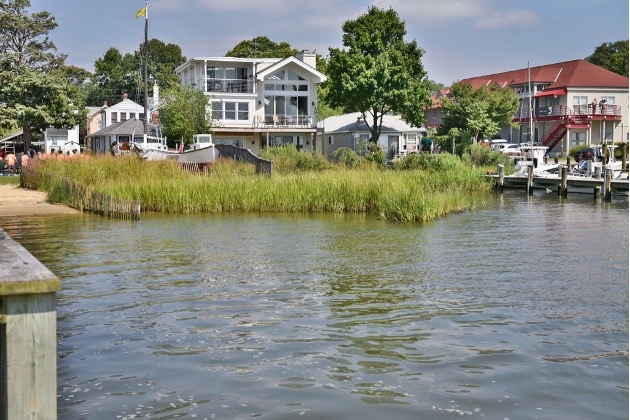
Annapolis Maritime Museum, Post-Construction
Return to Top
Frequently Asked Questions
Will a living shoreline work at my property?
Living shorelines are a ‘suite of techniques’, which involve installing materials such as sand, native plants, and rock. These techniques can include headland breakwaters, sills, groins, biologs, which will vary depending on your site conditions. More often than not, a combination of these nature-based techniques will work to protect your property.
I'm thinking about building a living shoreline at my property, where should I start?
Visit our
Living Shoreline Creation Process section for more information.
Do I need permits to alter my shoreline? Where can I find them?
Yes. All work below the average high tide line in tidal wetlands or tidewater requires a permit through the Maryland Department of the Environment (MDE). Other federal, state, local, permits may be required (Ie. Critical Area, Sediment and Erosion Control, Grading Permit, etc). A guide to permits can be found on our
Living Shoreline Permitting section.
Permit applications can be found here. The
permit application instruction manual can be found here.
A regional reviewer from the Maryland Department of the Environment (MDE) is responsible for reviewing your permit. If you have questions regarding MDE permits you can call your local reviewer. You can find the contact information of your local tidal and non-tidal wetlands reviewer at the
Wetlands and Waterways Protection Program Directory page on the MDE website.
What will a living shoreline cost?
Construction costs can range between $100 per linear foot to over $1,000 per linear foot depending on the wave energy, fetch, orientation, water depths, and overall site conditions. Again, living shorelines are a ‘suite of techniques’ so the technique chosen and the level of protection desired will be the main driver of cost.
What funding opportunities are available?
Visit our
Funding Opportunities section for more information.
Return to Top
Living Shoreline Creation Process
This section is meant to guide you through the process step by step, from concept to reality.
Step 1: Site assessment to determine which living shoreline techniques are most suitable given your site conditions.
Things to consider when designing a living shoreline:
- Your goals - Living shorelines can serve multiple purposes. Is your main goal to improve habitat? Prevent erosion? Enhance access?
- Costs - The cost of installing a living shoreline will vary greatly based on techniques, materials, and contractors that you choose to work with.
Speak with marine contractors, regulatory agencies, and local watershed organizations to discover which type of living shoreline project is best suited for your property.
Step 2: Look for funding assistance
Visit our
Funding Opportunities section to learn more about eligibility for financial assistance opportunities.
Step 3: Permit application
All work in tidal wetlands or tidewater requires a permit through the Maryland Department of the Environment (MDE). Other federal, state, and local permits may be required (Ie. Critical Area, Sediment and Erosion Control, Grading Permit, etc). A guide to permits can be found on our
Living Shoreline Permitting section.
Permit applications can be found here. The
permit application instruction manual can be found here. You can find the contact information of your local tidal and non-tidal wetlands reviewer at the
Wetlands and Waterways Protection Program Directory page on the MDE website.
Step 4: Build your shoreline
After all required permits have been obtained, and funding has been secured, you can build your living shoreline. Your contractor will know to pay close attention to permit authorization letters, as they list time of year restrictions in which you can’t build during certain periods of the year (migratory waterfowl, anadromous fish, submerged aquatic vegetation, etc). Any maintenance and monitoring requirements are listed in this letter as well.
Step 5: Maintain your shoreline
After building your living shoreline, make sure that it's correctly maintained by:
- Identifying and removing invasive species
- Pick up trash and excessive debris, especially after heavy storms
- While the shoreline is becoming established, regularly check for damage to plants and materials.
Return to Top
Funding Opportunities
Note that we do not fund structural solutions such as bulkheads, revetments, etc.
Shoreline Erosion Loan Program
Fund Source: The Shoreline Erosion Control Revolving Loan Fund
Maryland’s Shoreline Conservation Service was established in 1964 by act of the Maryland General Assembly for the purpose of addressing shoreline and erosion problems along the Chesapeake Bay and its tributaries. The program provides technical and financial assistance to waterfront property owners experiencing erosion.
Who is eligible for a 0% interest living shoreline loan?
Individuals or groups of homeowners, non-profit organizations, community organizations, counties and municipalities
Is there a cash contribution required?
An upfront cash contribution is required for individuals and groups of homeowners for loans greater than $60,000.
What is the loan term?
Loans range from 5-20 years depending on techniques implemented and their associated costs and projected longevity.
Is there an admin fee?
Each loan includes an admin fee that ranges from 3% to 10% based on project construction cost.
How are the funds dispersed?
Loans are dispersed for portions of completed work. Funds are distributed to the loan applicant. The loan applicant must provide proof of payment to the department.
Are there additional requirements for loan disbursement?
A county sponsored shore erosion control tax district (for community projects) or a shore erosion control lien (for private property projects) will need to be established. The department will assist with this process.
How do you apply for the loan?
Through
MD DNR Grants Gateway
Interested in learning more?
Fill out a
technical assistance request form and indicate that you are interested in the Shoreline Erosion Control Revolving Loan Fund.
Request technical assistance
Resiliency Through Restoration
Fund Source: Resiliency through Restoration Initiative (state) and Maryland Coastal Zone Management Award, National Oceanic and Atmospheric Administration (federal).
The Resiliency through Restoration Initiative supports implementation of living shorelines and other restoration projects that help protect communities from erosion, flooding and storm impacts. This program provides financial and technical assistance for projects that provide benefits to a community, municipality or county.
What does this fund?
Design, permitting, construction, and adaptive management of shoreline restoration or stormwater projects that address flooding and/or erosion. Permitting fees are not eligible. See the most recent Grants Gateway solicitation for updates on funding availability for each phase.
What are the basic requirements?
Projects must 1) provide community-wide coastal protection benefits to community infrastructure/assets, 2) be nature-based, and 3) consider climate change data and address future conditions.
Who is eligible?
Local Governments and non-profits
What type of property is eligible?
Public, Private, and Community. For the Resiliency through Restoration fund, community public property is prioritized and funding on private residential properties can be difficult to obtain.
For more information and how to apply?
See
Grants Gateway Outcome 3
Watershed Assistance Grant Program
This program is for design funds only and is managed by the Chesapeake Bay Trust. More
information about this program can be found here.
Return to Top
Living Shoreline Permitting
The Living Shoreline Protection Act of 2008 requires most private shoreline property owners in Maryland to use nonstructural, environmentally friendly erosion control methods—such as marsh plantings and natural vegetation—rather than hard structures like bulkheads or riprap. Living shorelines are preferred because they help trap sediment, filter pollutants, and support wildlife habitat. Exceptions may be available in areas where these methods aren’t feasible due to factors like heavy wave action, excessively deep water, and/or narrow waterbodies. The permit applicant must justify the need for traditional structures through a waiver process with the Maryland Department of the Environment. You can use the
Maryland Shoreline Stabilization Mapping Tool to see whether your shoreline is eligible for a waiver.
If you have other questions about the permitting process and how it applies to your property, please contact your MDE regional reviewer, whose contact information can be found on the
Wetlands and Waterways Protection Program Directory page on the MDE website.
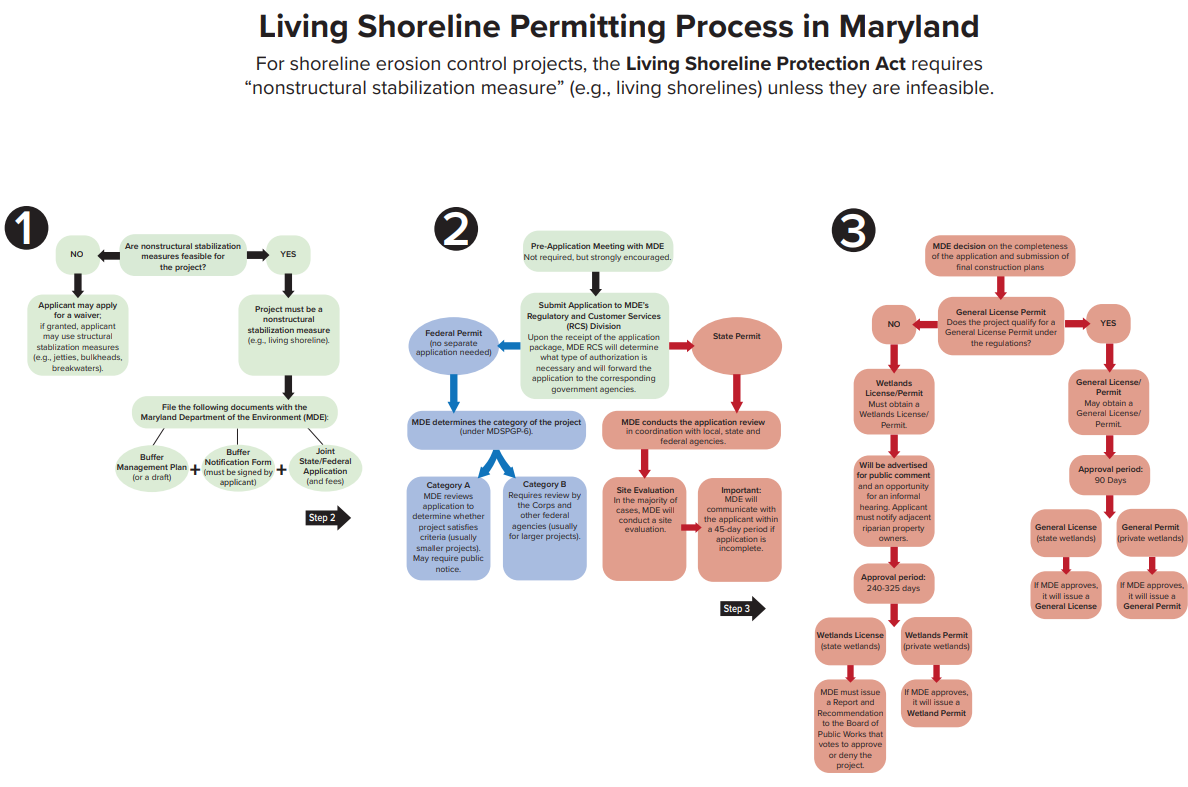
All work below the average high tide line in tidal wetlands or tidewater requires a permit through the Maryland Department of the Environment (MDE). Other federal, state, and local permits may be required (Ie. Critical Area, Sediment and Erosion Control, Grading Permit, etc).
Permit applications can be found here. The
permit application instruction manual can be found here.
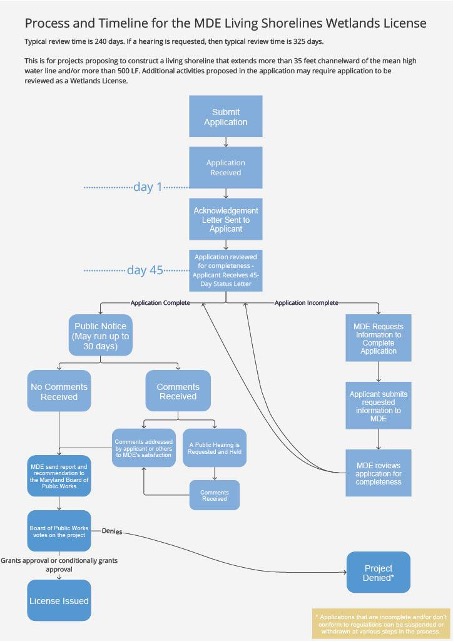
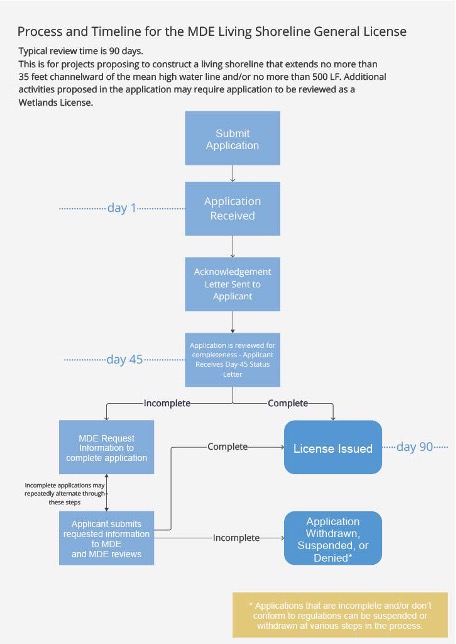
Permit Checklist
These are the permits/licenses that you need at minimum. Your county or city may have additional permits you need to file. Each of these permits may be with a different organization. Be sure to communicate with them to ensure your permits are filed correctly.
- Joint Federal / State Permit (General License or Wetlands License)
- Critical Area Approval (Buffer Notification Form & Management Plan)
- Sediment and Erosion Control Permit (Obtained from Local Municipality)
- Grading Permit (Obtained from Local Municipality)
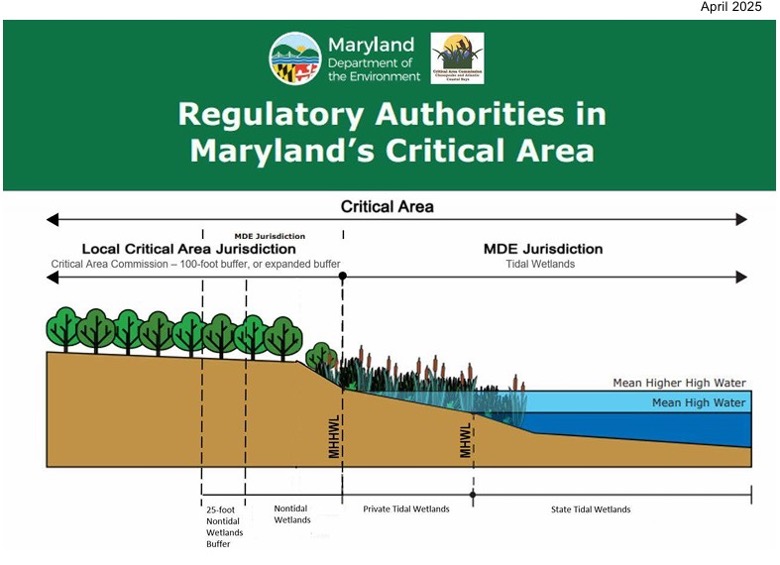
Regulatory Authority
Your project is likely to fall under multiple different authorities (MDE/Critical Area) depending on the location of proposed work along the shoreline. Use the graphic below to easily identify which regulatory authority your project falls under.
Return to Top
Resources
Native plants for wildlife habitat and conservation landscaping in the Chesapeake Bay watershed by the U.S. Fish and Wildlife Service
The Green Book for the Buffer: An Illustrated Guidebook for Planting at the Shoreline by the Maryland Coastal Zone Management Program, Department of Natural Resources
Regulatory Jurisdictions in Maryland
Maryland Department of the Environment - Tidal Wetlands Staff Contacts Directory
Permit Instructions & Example Drawings of Tidal Projects (MDE)
2008 Living Shoreline Protection Act
Shore Erosion Control Guidelines for Waterfront Property Owners (2nd edition)
Living Shoreline Definition:
Living shorelines are the result of applying erosion control measures that include a suite of techniques which can be used to minimize coastal erosion and maintain coastal process. Techniques may include the use of fiber coir logs, sills, groins, breakwaters or other natural components used in combination with sand, rock, and native wetland vegetation and/or other natural materials. These techniques are used to protect, restore, enhance or create natural shoreline habitat.
Return to Top
Living Shoreline Research
Interested in the latest publications concerning living shorelines? Look at these recent research papers.
Request technical assistance
Return to Top

