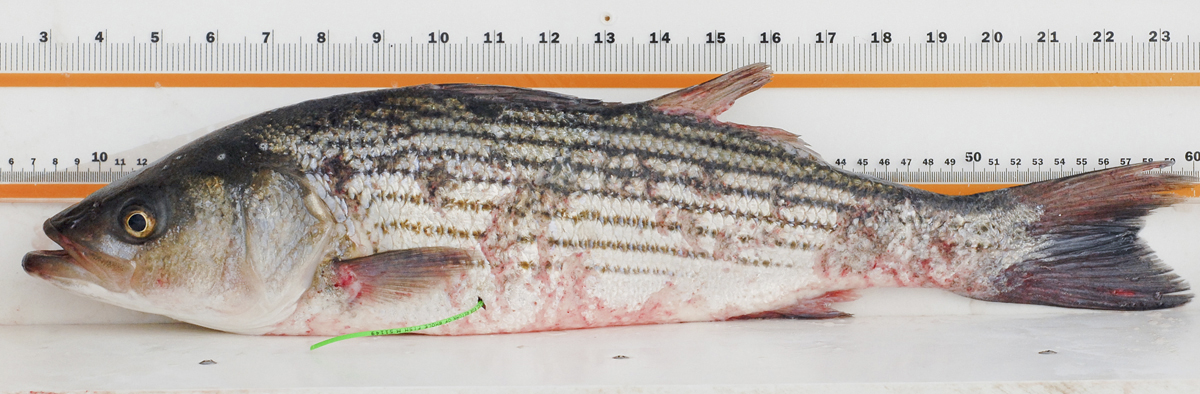
Striped bass with severe disease (mycobacteriosis).
What is Mycobacteriosis?
Mycobacteriosis (myco) is a fish disease caused by 1 or more species of bacteria in a group known as mycobacteria. This group of bacteria can infect most species of fish, including striped bass (rockfish) in the Chesapeake Bay. The bacteria can also infect humans through open cuts or wounds on the skin, often from handling diseased fish. Mycobacteria are found in the environment, in the water, sediments, and on other organisms. It is likely that all striped bass in the Bay are exposed to these bacteria, and many of them acquire infections and disease.
This disease was first observed in Chesapeake striped bass in the 1990s and continues to be a problem. More than half of the striped bass that live year-round in Chesapeake Bay have this disease, although in some fish it is very mild, while in others it can be severe. Fish with severe disease are less likely to survive until the following year, but many fish with mild to moderate disease can live for years. Like many other fish diseases, the persistence of myco in striped bass indicates that this fish population is under stress. Stress comes from changes in the environment that fish are not used to, such as low oxygen and high water temperatures in the summer, excess nutrients, or other factors. Myco has been detected in other fish species such as white perch, but it appears that only striped bass develop moderate to severe forms of disease.
View the Mycobacteriosis Fact Sheet for more information
How can I tell if a striped bass has Myco?
Many striped bass have mild forms of disease. These fish may appear healthy on the outside. Signs of disease in fish with mild forms are often limited to internal organs such as the spleen and kidney. Those organs may have many small bumps. As disease severity progresses, ulcers will start to develop in the skin (see picture above) and the fish may be skinnier compared to a healthy fish.
Typical signs of myco in a striped bass include:
- No external physical signs of infection
- Nodule-like lesions in the spleen and other internal organs
Severe Physical Signs of myco include:
- Unusually skinny (emaciated) appearance
- Numerous sores (ulcers) covering the body
How Many Striped Bass are Affected?
Figure1: Prevalence of myco in striped bass since 1998.
- Initial surveys in 1998 indicated that about 25% of the resident striped bass had myco.
- By 2022, that number had increased to more than 50%
- Survey data are based primarily on fish under the age of 6 (generally less than 25 inches long) and considered residents of the Chesapeake Bay.
- Studies have determined that severely diseased fish are less likely to survive compared to healthy fish.
How to Protect Yourself When Handling Fish
When handling infected fish wear gloves, wash hands, cleanse and bandage open wounds, dispose of leftover fish parts, and clean tools used to filet. Call a health provider if you have any questions or concerns after handling. Striped bass are safe to eat when properly cooked. Maryland Department of Health recommends not consuming raw fish or fish with signs of disease.
What is Maryland DNR Doing About this Disease?
Since 1998, DNR has monitored this disease in striped bass. Each year, fish are collected from numerous locations around the Chesapeake Bay and examined for disease.
In recent years, the prevalence of this disease appears to be increasing in the population. Information gathered in this survey is being used in fisheries and environmental studies. Scientists from DNR, the University of Maryland, and the National Oceanic and Atmospheric Administration (NOAA) are using data gathered from the striped bass disease survey to determine how many fish are dying from this disease and to identify the sources of stress. This research will provide helpful information on why this disease has persisted in the population for over two decades and the impact the disease may have on the coastal population.
What Can You Do?
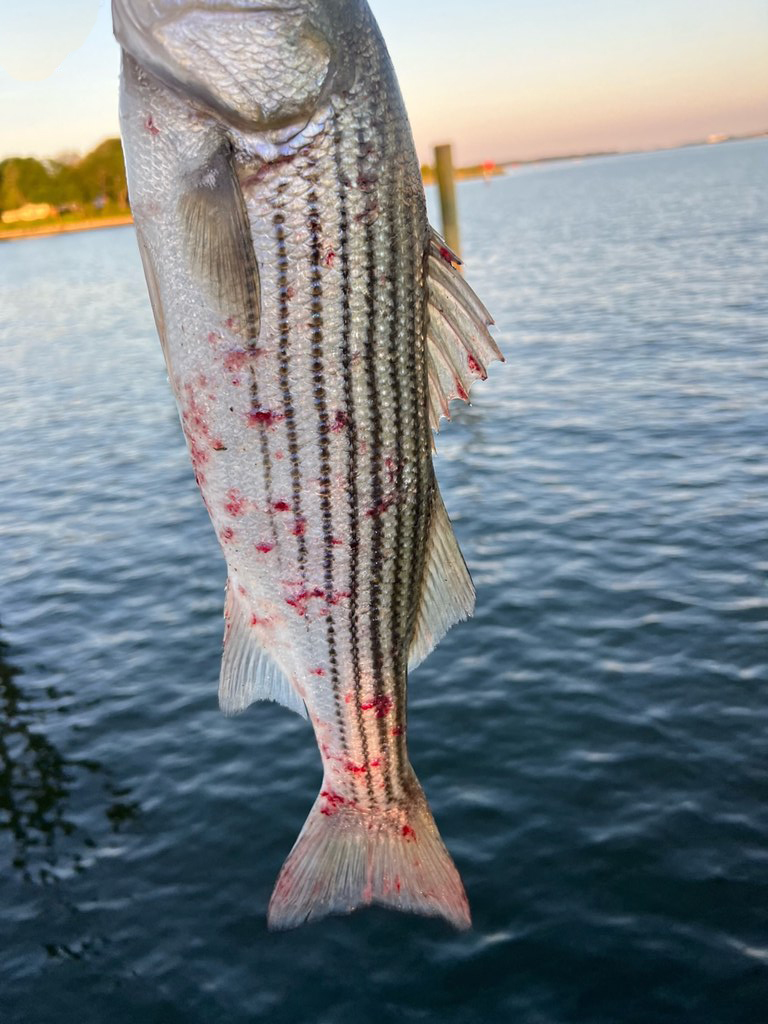 Anglers occasionally catch striped bass with signs of disease, such as ulcers and reddened areas in the skin (see picture). The department recommends that anglers release diseased fish. There is no data to indicate that removing diseased individuals will reduce the disease impact on the striped bass population.
Anglers and watermen should also take basic precautions (listed above) to prevent infections from handling diseased fish.
Mycobacteria can cause rare infections in people through breaks in the skin:
- The disease in humans is characterized by the appearance of small nodules (reddish bumps) or ulcerations.
- Infections in humans are generally limited to extremities such as the hands.
- Individuals with cuts, scrapes, or compromised immune systems are at a higher risk of infection. Human infections are rarely serious if diagnosed and treated promptly.
More Information?
For more information, contact your healthcare provider or local health department. If you have any questions or concerns about fish health, contact the Maryland Department of Natural Resources at
[email protected].
