Quick Links
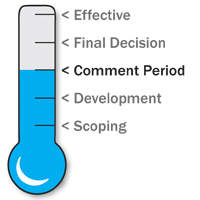
FOREST CONSERVATION - COMAR 08.19
The purpose of this action is to implement Senate Bill 526 (2023) and House Bill 1511 (2024), which amended the Forest Conservation Act under Natural Resources Article, §§5-101, 5-102, and 5-1601 through 5-1613, Annotated Code of Maryland.
Maryland’s forests are vital to the state’s environmental health, economic well-being, and quality of life. They clean our water, stabilize soil, store carbon, provide habitat for countless species, and offer spaces for recreation and reflection. As Maryland grows, so does the need to thoughtfully balance development with conservation.
The Forest Conservation Act (FCA), enacted in 1991, was created to meet that need. Its purpose is to integrate forest protection into the earliest stages of land planning and development—ensuring that trees and sensitive natural areas are not an afterthought, but a foundation for sustainable growth.
A Vision for Land Stewardship
In early 1990, then-Governor William Donald Schaefer created a statewide taskforce to assess the challenges and opportunities facing Maryland’s forests. The group’s recommendations laid the groundwork for the Forest Conservation Act—recognizing the need for a strong law that would conserve forests and encourage reforestation as part of responsible land development.
Working with state agencies, stakeholders, and conservation partners, the Maryland Forest Service developed the Forest Conservation Act and its implementing regulations. The FCA also works alongside Maryland’s Reforestation Law, which addresses forest replacement associated with certain State-funded highway and construction projects. Today, the FCA stands as one of Maryland’s most effective tools for protecting forests in the face of expanding development.
State and Local FCA Review
The Forest Conservation Act is administered by the Maryland Forest Service and carried out through both State and local review. Counties and municipalities with approved local forest conservation programs review most projects within their jurisdictions. The Maryland Forest Service reviews projects in jurisdictions without an approved local program and certain projects that remain under State review.
Local forest conservation programs are responsible for applying FCA requirements during subdivision, grading, and sediment control review. This includes determining whether the law applies, reviewing exemptions, approving forest conservation plans, tracking mitigation, and ensuring long-term protection of retained or planted forest.
Maryland Forest Service provides statewide guidance, technical assistance, training, and oversight to support consistent implementation of the FCA. The Department also provides a
Local Program Model Ordinance to help counties and municipalities update or develop local forest conservation programs consistent with State law and regulations.
Applicants should work with the appropriate State or local forest conservation program early in project planning to determine which requirements apply. For more information about Forest Stand Delineations, Forest Conservation Plans, maintenance agreements, and plan submittal, visit the
FCA Requirements page.
How Are Trees Protected During Construction?
One of the most important ways the FCA supports conservation is by protecting forests during construction—when trees are most vulnerable to damage or removal.
By requiring early identification of forested and sensitive areas, the FCA enables developers and planners to design projects that retain priority forest features. This includes:
- Forests adjacent to streams, wetlands, or other water bodies
- Areas on steep or highly erodible soils
- Forest blocks that are part of wildlife corridors or large, contiguous habitat areas
Once identified, these areas can be designated for long-term protection—either preserved on-site or replaced through off-site planting. Forest Conservation Plans may also include construction-phase protections such as tree save fencing, root zone protection, and erosion control measures to prevent damage to retained trees.
FCA Qualified Professionals: Experts in Forest Conservation
A core part of the FCA’s success is the role of Qualified Professionals (QPs)—individuals trained and certified to prepare or review Forest Stand Delineations and Forest Conservation Plans. These professionals are typically:
- Licensed foresters
- Licensed landscape architects
- Environmental consultants
- Engineers or planners with natural resource expertise
To become a QP, individuals must complete specialized training through the Maryland Department of Natural Resources and pass a certification exam. QPs ensure that plans comply with FCA regulations and reflect sound ecological practices, helping landowners and developers navigate the review process efficiently and responsibly.
Click here to learn more about becoming an FCA Qualified Professional.
Contact Us
Katherine Phillips
Forest Conservation Manager
Maryland Forest Service
Department of Natural Resources
14110 Pleasant Valley Road
Flintstone, Maryland 21530
(301) 777-5591 (Office)
(301) 707-9913 (Cell)
[email protected]
